

The Six Core Pathological Processes Within The ACT Model
The 6 Core Pathological Processes in the ACT Model: Unraveling the Webs of Struggle
Acceptance and Commitment Therapy (ACT) offers a comprehensive approach to psychological flexibility, emphasizing the harmonious blend of acceptance and committed action.
But to truly appreciate its nuances, it’s also essential to understand the pitfalls of the ACT model —the core pathological processes that can disrupt mental well-being.
These are essentially the flip side of ACT’s six core therapeutic processes. Let’s shine a light on these processes and understand how they might entangle individuals in webs of psychological struggle.
Looking to get started?
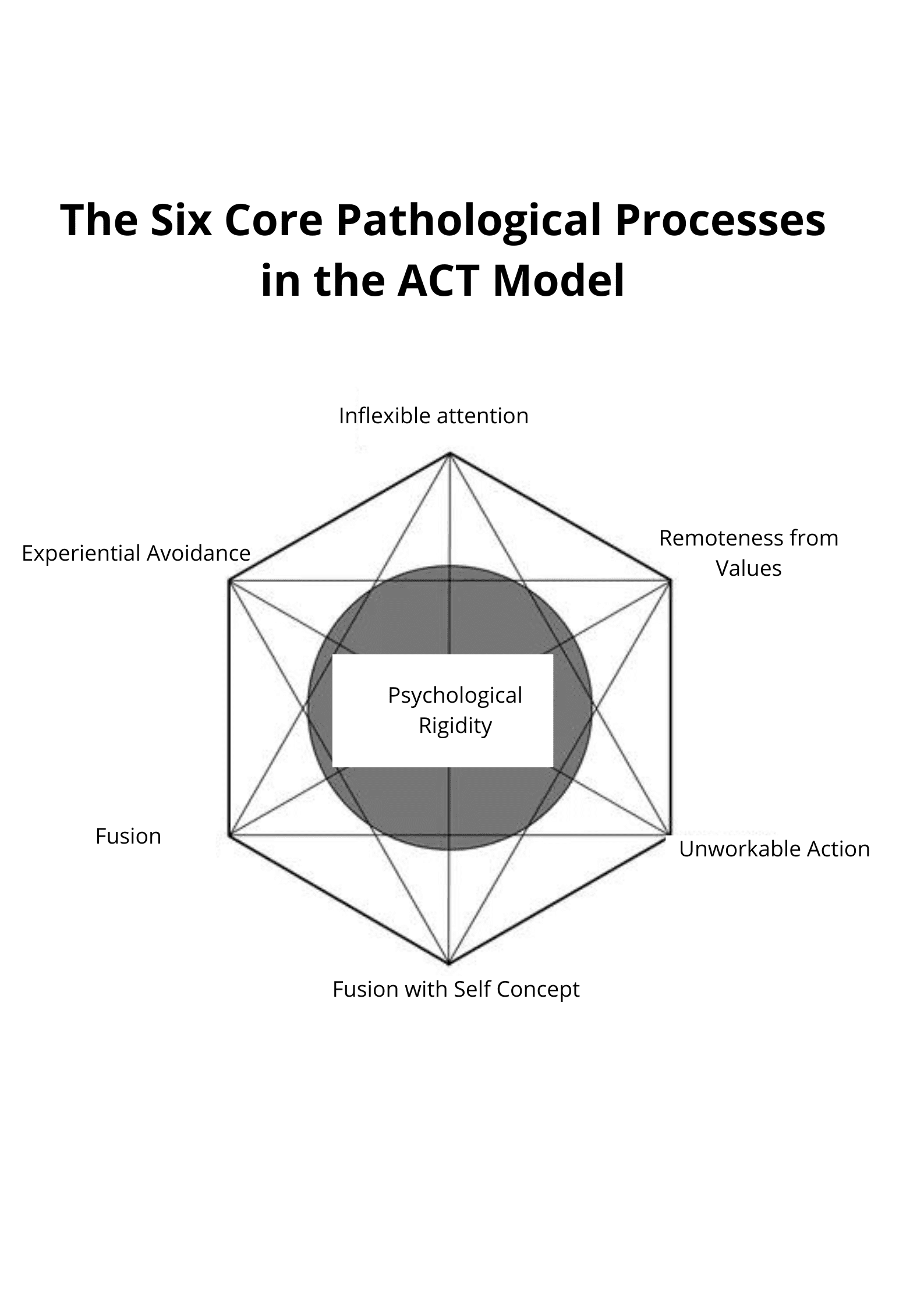
1. Cognitive Fusion in the ACT model
Definition: Cognitive fusion refers to getting caught up or entangled with our thoughts to the extent that they dominate our behavior and perception of reality.
Impact: When fused with thoughts, individuals might take their thoughts as literal truths, leading to limited behavior, increased distress, and a distorted perspective on reality.
ACT Counterpart: Cognitive Defusion, where individuals learn to see thoughts as just thoughts, without letting them dictate behavior or perception.
2. Experiential Avoidance in the ACT model
Definition: This process involves attempts to avoid or escape from unpleasant thoughts, feelings, memories, or bodily sensations, even when doing so creates harm in the long run.
Impact: While avoidance might offer temporary relief, it often leads to increased distress, reduced engagement with life, and missed opportunities.
ACT Counterpart: Acceptance, where individuals are encouraged to open up and make room for unpleasant experiences without unnecessary attempts to avoid or get rid of them.
3. Dominance of the Conceptualized Self in the ACT model
Definition: This refers to an over-reliance on self-stories, labels, and evaluations, which can limit an individual’s understanding of their multifaceted self.
Impact: When stuck in narrow self-concepts, individuals might feel trapped by their self-stories, leading to reduced self-worth and limited personal growth.
ACT Counterpart: Self as Context, which encourages viewing the self from a broader perspective, recognizing the observing self beyond mere self-concepts.
4. Lack of Values Clarity in the ACT model
Definition: Here, individuals are unclear or disconnected from what truly matters to them, leading to a rudderless existence.
Impact: Without clear values, actions might lack purpose and direction, leading to feelings of emptiness and aimlessness.
ACT Counterpart: Values Clarification, where individuals identify and refine their deeply-held principles to guide purposeful actions.
5. Unworkable Action in the ACT model
Definition: This process is characterized by actions that aren’t aligned with one’s values. It can manifest as complete inaction, impulsive decisions, or persistently avoiding value-driven actions.
Impact: Such behaviors can amplify feelings of regret, frustration, and unfulfillment.
ACT Counterpart: Committed Action, emphasizing taking deliberate, purposeful steps in line with identified values.
6. Being Stuck in the Past or Future in the ACT model
Definition: This process involves excessive focus on the past (ruminations, regrets) or the future (worries, anxieties) at the expense of the present moment.
Impact: This can lead to missed current opportunities, reduced enjoyment of the present, and heightened distress.
ACT Counterpart: Present Moment Awareness, emphasizing being fully engaged and attuned to the current experience.
Conclusion
Understanding the core pathological processes in the ACT model is crucial for recognizing the traps that can hinder psychological well-being. By being aware of these pitfalls, individuals are better equipped to navigate their mental landscapes, seeking interventions that promote flexibility, acceptance, and purpose-driven action. The beauty of ACT lies in its holistic approach, offering not just remedies for these challenges, but also a comprehensive roadmap for a fulfilling, vibrant life.
